

Partiful vs Luma (and the rest): does your ticketing platform actually matter?
Not as much as you'd think. Partiful, Luma, Eventbrite, Posh and the rest are pretty similar for most events, and platform discovery usually drives under 10% of sales unless the event is free. Pick the one with fees you like (we prefer Luma), cross-post everywhere with one checkout link, and put your energy into your own audience.
the rooms still open this december.
Every Monday until the holidays: private rooms and buyouts at SF bars and restaurants that are still free on Friday and Saturday nights. Tap one and Nora texts you the price.
you're on the list.
tell noraEvery ticketing platform promises discovery: list with us and new people will find your event.
Across our events, it's driven less than 10% of sales.
So stop losing evenings to this question. You know the drill: four tabs, RSVP pages side by side, a thread where someone swears one platform doubled their sales, and no ticket link at the end of it.
Our team has thrown events for more than 10,000 people, and we've worked with 1,000+ event organizers. Here's our honest take: the platform doesn't make a big enough difference to stress over.
Is Partiful or Luma better for event tickets?
For most events, they're pretty similar. So are Eventbrite, Posh and the newer ones that pop up every year. They all do the basics well: a nice-looking event page, RSVPs or paid tickets, a guest list, reminders, and some way to message people who signed up. The differences are mostly in the look and feel, who tends to hang out on each one, and fees.
We prefer Luma, because in our experience its fees have been the lowest. To be clear, we're not affiliated with Luma and nobody's paying us to say that. Fees and pricing tiers change, so check current pricing on every platform before you pick. What was cheapest last year might not be now.
If your crowd already lives on one platform (your friends all RSVP on Partiful, your tech meetup people are all on Luma), that's a perfectly good reason to use it. Familiarity beats a nicer feature list.
How much do ticketing platforms actually help with discovery?
Less than the sales pitch says. Some platforms will tell you their discovery feeds bring in 10 to 30% of your sales. In our experience, it's usually under 10%.
The big exception is free events. Free events get noticeably more discovery traffic, because browsing a "things to do this weekend" feed and tapping RSVP costs nothing. Ask someone to put in a card for a $45 dinner and they want to know who's going, who's hosting, and whether their friend is in.
So where do ticket sales actually come from? In our experience:
- Your own audience. Past attendees, your email list, the people who follow you.
- Social posts. Stories, a good photo from the last event, a countdown the week of.
- The group chat. One message in the right chat can outsell a week on a discovery feed.
- Friends bringing friends. The strongest channel there is. Make it easy to buy a second ticket.
If you want to get serious about that first bullet, we wrote about building a community around your events.

Can you list your event on Partiful, Luma and Eventbrite at the same time?
Yes, and this is the strategy we use. List the event on all of them so you get each platform's discovery, but put the link to the one place where people actually buy tickets and pay at the top of every listing. You tap into each platform's users without paying every platform's fees, and you keep one clean guest list instead of three.
Two honest caveats. First, read each platform's rules on outside links before you do this. Some are fine with it, some limit it, and those rules can change. Second, keep the details identical everywhere. Same date, same start time, same address, same price, same refund policy. If one listing says 7pm and another says 7:30, you'll spend the night of the event answering DMs instead of hosting.
How do you sell tickets for a private dinner or party at a restaurant?
This is where a ticket link really earns its keep. If guests are paying their own way for a supper club, a group birthday, or a pop-up in a private room, selling tickets beats fronting the bill and chasing 30 Venmos for a week. Money comes in before the night, and you know your real headcount.
Here's how we'd set it up:
- Get the venue's minimum first. Most SF restaurants and bars price private rooms on a food-and-beverage minimum, not a room fee. That number drives everything.
- Do the ticket math. Take the minimum, add the service charge (commonly around 20 to 25%) and tax, then divide by a conservative headcount, not your dream headcount. That's your floor per ticket. Add the platform's fees on top or build them in.
- Match your deposit timeline. If the venue wants a deposit to hold the date, you can sell an early batch of tickets to cover it, then open the rest.
- Decide deposit vs full payment. Full payment up front is simplest. A deposit ticket with the balance later sounds friendlier but means chasing people again.
- Set your refund policy to match the venue's. When your deposit goes non-refundable, so do the tickets. Allow transfers to a friend instead, and say so on the listing.
- Send the venue the guest list. Export it a day or two before and share the final count and any dietary notes.
For a sense of what minimums look like (from the low hundreds for a weeknight semi-private area to several thousand for a weekend buyout), see what a private event space costs in San Francisco. And if it's a birthday, our big-group birthday dinner guide covers the rest.
What about check-in on the night?
Every major platform has some kind of check-in, usually a QR code you scan from your phone. It's fine. For a 40-person dinner, a printed list and a pen at the door works just as well and doesn't die when your battery does. For a bigger party with a line down the block, put one person on check-in whose only job is check-in, and give the venue's door staff the list too.
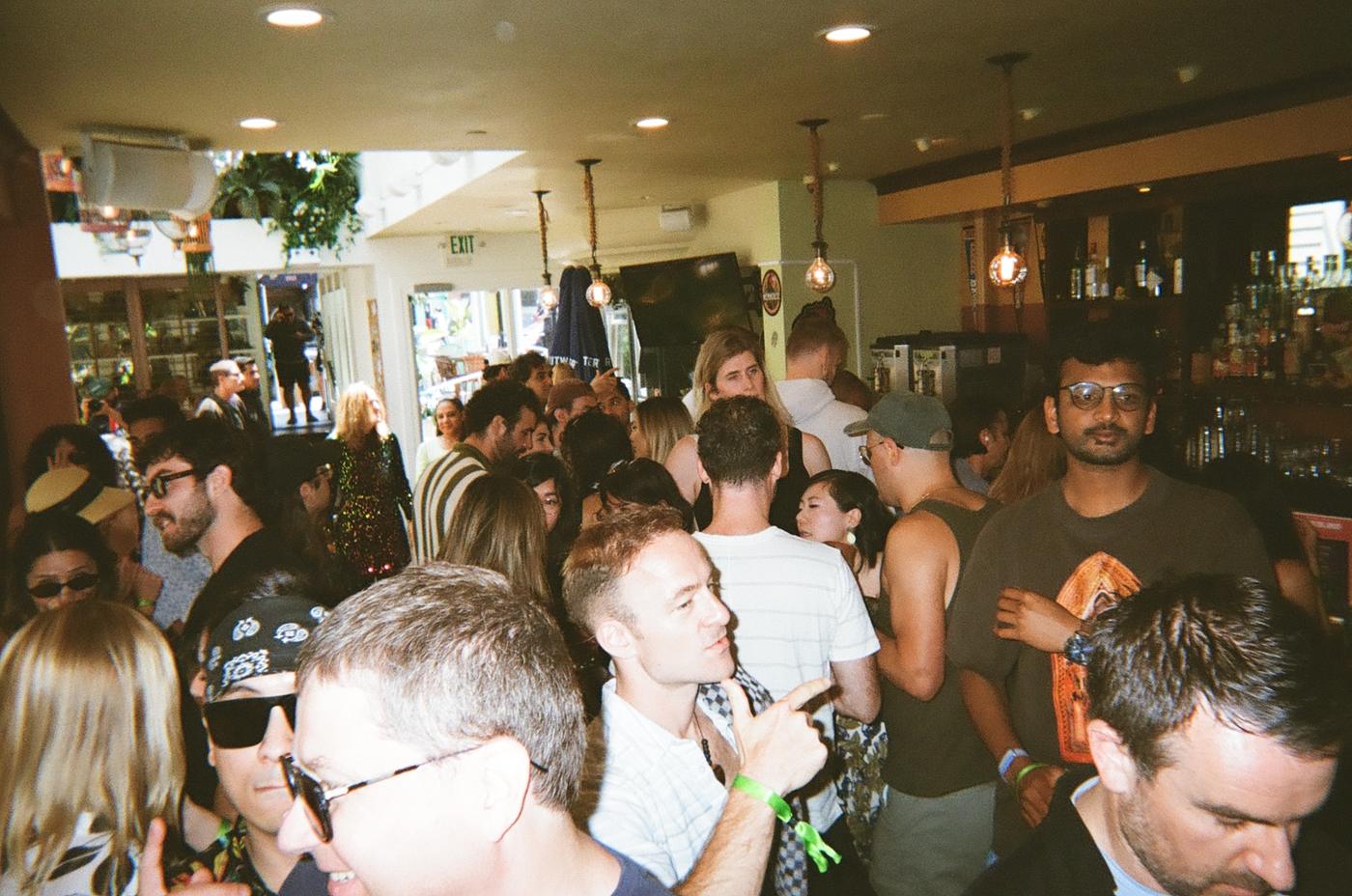
The hard part isn't the ticket link, it's the room
Here's the thing we learned the slow way. You can set up a ticket page in ten minutes. Finding a room that fits your date, your headcount and your budget can take weeks. Event inquiries land in a shared inbox or a voicemail that one person checks between services, the minimum is buried on page four of a PDF, and the good rooms on prime nights (anything near Moscone during a big conference week, any Saturday in December) go to whoever's ready first.
What I'd do: use whichever platform is cheapest and easiest for you, put one checkout link everywhere, and spend the time you saved on the room.
That part we can take. Tell Nora, our party planner, your date, headcount, budget and vibe by chat or text. Venues that fit say yes before you ever see them, so every option actually wants the booking, and the minimum comes up front, so you can price your tickets before you open sales instead of guessing. You follow along on a status page, get a text when options are ready, and we introduce you to the venue to lock it in. No last-minute surprises when the bill shows up.
Conjunction matches organizers with private rooms and buyouts at SF restaurants and bars, priced on a food-and-beverage minimum with no room rental fee.
get rooms that fit. free.Frequently asked questions
Is Partiful or Luma better for selling event tickets?
For most events, either one works fine. We prefer Luma because in our experience its fees have been the lowest, and we're not affiliated with it. Fees change, so check current pricing on both before you decide.
How much of your ticket sales come from platform discovery?
Some platforms pitch discovery as 10 to 30% of your sales. In our experience throwing events for 10,000+ people and working with 1,000+ organizers, it's usually under 10%. Free events tend to get more discovery traffic than paid ones.
Can you list the same event on multiple ticketing platforms?
Yes. A common approach is to list it everywhere for discovery and put the link to your one real checkout at the top of each listing. Read each platform's rules on outside links first, and keep the date, time, address and price identical everywhere.
Should you sell tickets for a private dinner or party?
If guests are paying their own way, yes. Collecting money up front through a ticket beats chasing Venmos after the bill lands. Price each ticket to cover the venue's food-and-beverage minimum plus service charge and tax, divided by a conservative headcount.
What should your refund policy be for a ticketed event?
Match it to your deal with the venue. If your deposit becomes non-refundable at a certain date, stop offering refunds around then too, and allow transfers to a friend instead. Put the policy on the listing so nobody is surprised.

Simon Reznichky, co-founder. Started 415 Coffee Club and has thrown events for 10,000+ people in SF.